The back story
Wild mountains: ibex, marmots, vultures and elk
Alpine ibex above the lifts, marmots in the summer meadows, bearded vultures back in the Alps, and elk and wildlife bridges in the Rockies: the wild side of the ski resorts.

Photo Credit
Image courtesy of © Giles Laurent · CC BY-SA 4.0 via Wikimedia CommonsThe wild side of the great ski regions, from the alpine ibex saved in the Gran Paradiso and the marmots of the summer meadows to the bearded vultures returned to the Alps, the elk of Jackson Hole and the wildlife bridges of Banff, with the national parks beside our resorts. Facts from the parks themselves, Parks Canada, the U.S. Fish and Wildlife Service and the Vulture Conservation Foundation.
The great ski regions are also some of the wildest country in Europe and North America. Above the lifts of the Alps, alpine ibex pick their way across ledges that look impossible, marmots whistle from their burrows, and bearded vultures, gone from the range for most of the 20th century, ride the thermals again. In the Rockies, elk winter on the valley floors below the slopes, and Banff’s ski areas lie inside a national park that has built bridges for its animals.
Winter is a hard season for mountain wildlife, so the best encounters are quiet ones: from a snowshoe trail, a lift or a valley road, with binoculars rather than a closer approach. Many resorts sit beside national parks, and the parks’ own rangers and centres are the best guides.
Every alpine ibex above the lifts owes its life to one royal hunting reserve in Italy.
Ibex and chamois
The alpine ibex, with the great ridged horns of the males, is the emblem of the Alps, and it very nearly vanished. In the 19th century hunting had driven it back to a few mountains in what is now Italy’s Gran Paradiso, in the Aosta Valley, the region of Courmayeur and Cervinia. Today ibex are seen across the high Alps, from the Vanoise to the Engadine, often surprisingly close to ski areas, grazing south-facing slopes where the snow melts first. Chamois, smaller and quicker, share the same country.
France’s first national park, the Vanoise, created in 1963, borders the ski area of Val d’Isère and Tignes; the main reason for its creation was to protect the ibex. In Switzerland, the Swiss National Park in the Lower Engadine, a short drive from St. Moritz, was founded in 1914 and is the oldest national park in the Alps; its visitor centre is in Zernez.
Marmots and the mountain summer
If you come back to the mountains in summer, you will hear the marmots before you see them: a sharp whistle from a sentry standing upright beside its burrow. Alpine marmots spend the long winter hibernating underground, and emerge in spring to feed on the alpine meadows, so they belong to the green season, along with the wild flowers and the high walks between the lift stations.

Photo Credit
Image courtesy of © Giles Laurent · CC BY-SA 4.0 via Wikimedia CommonsBirds of the high peaks
Golden eagles hunt the high valleys, and the bearded vulture, with a wingspan of close to three metres and a diet made mostly of bones, is back. Hunted out of the Alps by the early 20th century, it returned in 1986, when the first young birds bred in captivity were released in Austria’s Hohe Tauern National Park. The Vulture Conservation Foundation, which leads the project, counts more than 300 bearded vultures in the Alps today, with over 60 breeding pairs.

Photo Credit
Image courtesy of © Giles Laurent · CC BY-SA 4.0 via Wikimedia CommonsThe Rockies: elk and wildlife bridges
In the Canadian Rockies, the ski areas of Banff and Lake Louise lie inside Banff National Park, where elk, bighorn sheep and bears live. The Trans-Canada Highway through the park is fenced for 82 kilometres and crossed by 44 wildlife structures, six overpasses and 38 underpasses; Parks Canada says this is the most wildlife crossing structures and highway fencing in a single place on the planet, and that collisions between vehicles and wildlife have fallen by more than 80 percent.

Photo Credit
Image courtesy of © WikiPedant · CC BY-SA 4.0 via Wikimedia CommonsAt Jackson Hole, the National Elk Refuge lies on the edge of the town of Jackson. It was established in 1912 to stop elk starving in the hard winters, and large herds of elk still winter there. In winter, horse-drawn sleigh rides take visitors out among the herd; the U.S. Fish and Wildlife Service, which runs the refuge, has the season and booking details.

Photo Credit
Image courtesy of © USFWS Mountain-Prairie · Public domain via Wikimedia CommonsFeature: the ibex that came back
In 1856, when the alpine ibex had fallen to alarming numbers, King Vittorio Emanuele II declared the mountains of Gran Paradiso a royal hunting reserve, and so, in the words of the park itself, saved the ibex from extinction. In 1922 the reserve became Italy’s first national park, Gran Paradiso. Ibex from these mountains later restocked the rest of the Alps, which is why you can meet them above so many resorts today.

Photo Credit
Image courtesy of © Irene Vercellino · CC BY-SA 4.0 via Wikimedia CommonsDid you know? Almost every alpine ibex you see in the Alps today is descended from the small population that survived in the Gran Paradiso, saved by a royal hunting reserve.
Our advice
Our advice: in winter, give wild animals a wide berth: running away through deep snow costs them energy they cannot replace before spring, so keep to marked trails, respect the wildlife quiet zones marked in many Alpine regions, and never follow tracks off-piste into forest. Bring binoculars, look for ibex on sunny, south-facing slopes, and for the Rockies keep to the speed limits in the parks. Never feed wild animals. For marmots and wild flowers, come back in summer.
Why it's on our list
- Ibex and chamois
- Marmots and the mountain summer
- Birds of the high peaks
- The Rockies: elk and wildlife bridges
- Feature: the ibex that came back
- Our advice
Location
The map comes from Google Maps, which sets its own cookies once it loads.
More in depth
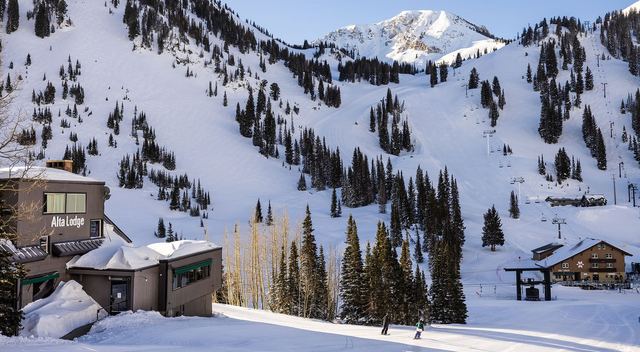 Alta’s first ski lodge · In depthAlta LodgeAlta’s first ski lodge, since 1940, ski-in/ski-out at the base of the mountain, with saunas, hot pools facing High Rustler, a Kids’ Club and breakfast and dinner included.
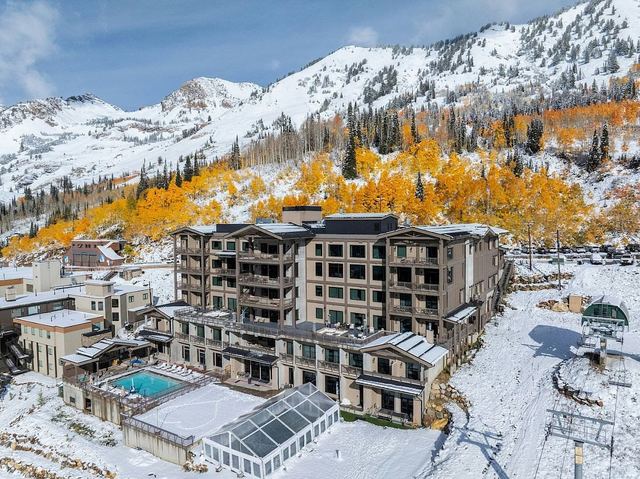 Ski-in/ski-out, with a spa · In depthSnowpine LodgeA ski-in/ski-out lodge at the base of Alta with the six-room Stillwell Spa, a granite grotto and cold plunge, a heated outdoor pool and jetted spas, Swen’s and The Igloo.
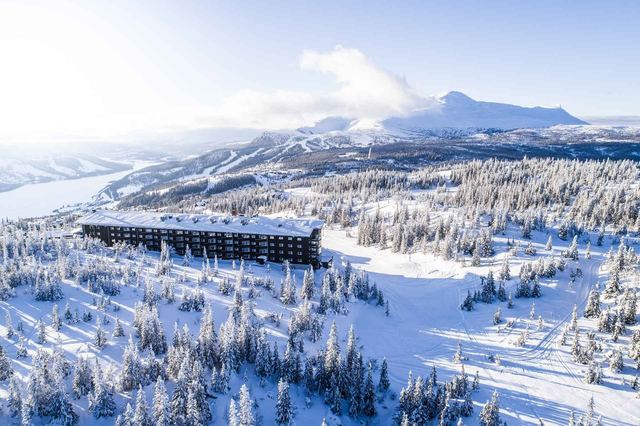 In the MICHELIN Guide hotel selection · In depthCopperhill Mountain LodgeA wooden design hotel by Peter Bohlin at 730 metres on Förberget, with Level Spa’s indoor pool, hot springs at 36°C and 38°C facing Åreskutan, saunas with a snow bath and six treatment rooms, and Restaurant Niesti.